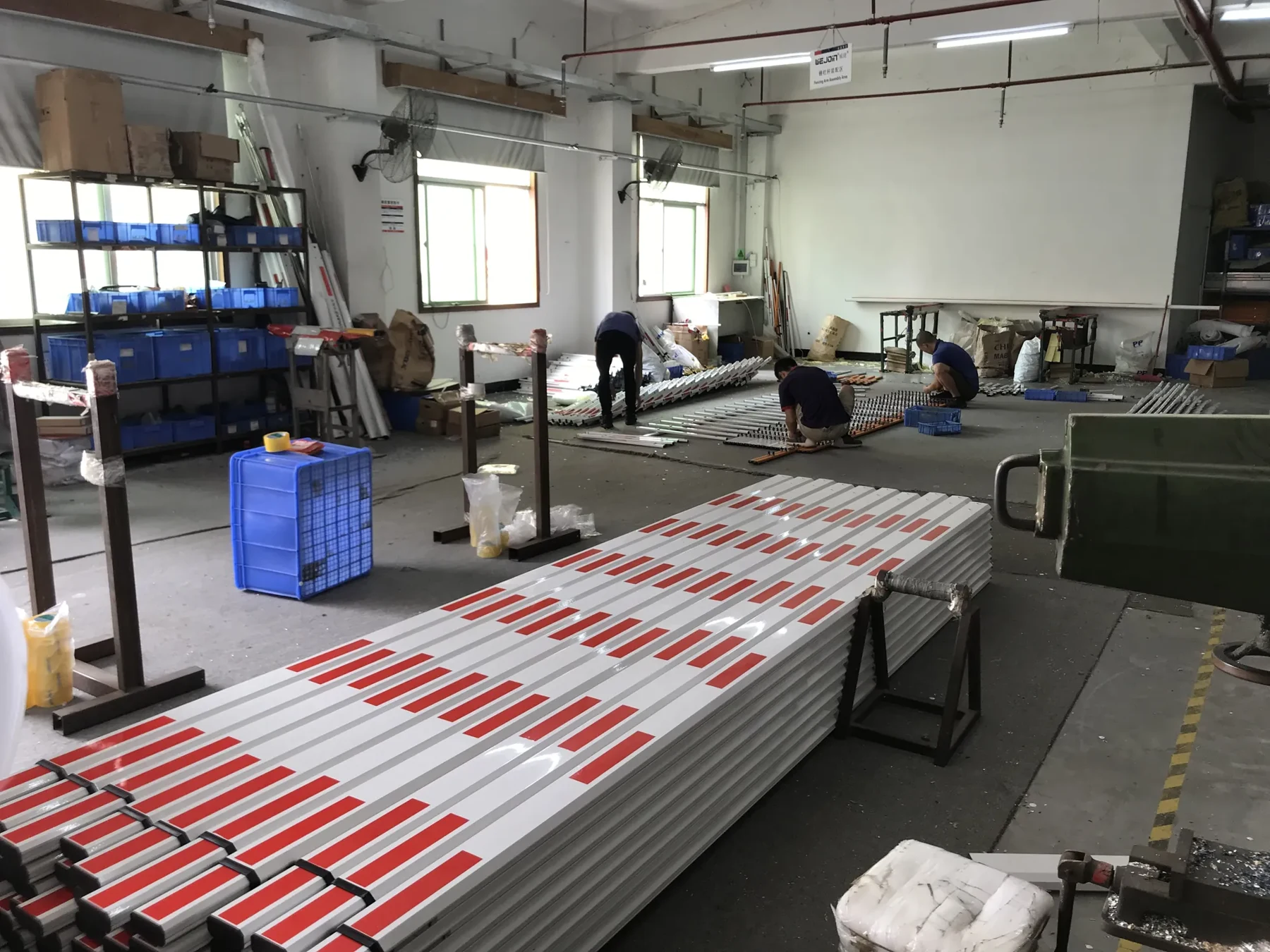
Start with the space the arm will move through. Measure the vehicle opening at the proposed gate position, then record the height from the finished floor to the lowest obstruction above the arm's path. Include beams, signs, pipes and any raised kerb under the cabinet. The road width alone does not tell you which arm will fit.
Match the arm to the lane
| Site condition | SXK-D01 arm to review |
|---|---|
| The arm can rise through its full travel with room above it | Straight arm |
| A beam or low ceiling limits vertical clearance | Folding arm. Check the sweep of both sections against the installation drawing. |
| The project calls for visible horizontal rails across the vehicle opening | Two-rail or three-rail fence arm. Compare the clearances and dimensions for each version. |
| The installer needs to adjust the working length on site | Telescopic arm. Check the adjustment range for the specific configuration. |
| The specification calls for an illuminated arm, a carbon fiber foam arm or a swing-away holder | Compare the corresponding LED, carbon fiber and swing-away versions. Each has its own configuration and drawings. |
Check what will control the gate
On the site plan, mark the cabinet side, the vehicle approach and where a loop detector, radar or photocells would go if specified. If the lane already has an ANPR terminal or parking controller, include the make, model and interface details. Ask the supplier to confirm the gate inputs and detector compatibility for the exact version you intend to order.
For a quote, send the lane width and overhead clearance, a photo taken from the vehicle approach, the cabinet location, the expected number of lanes and the equipment already on site. If any dimensions are provisional, mark them as such so the proposed arm can be checked against the final drawing.
Compare the SXK-D01 arm configurations or send your lane details to Thinkpark.