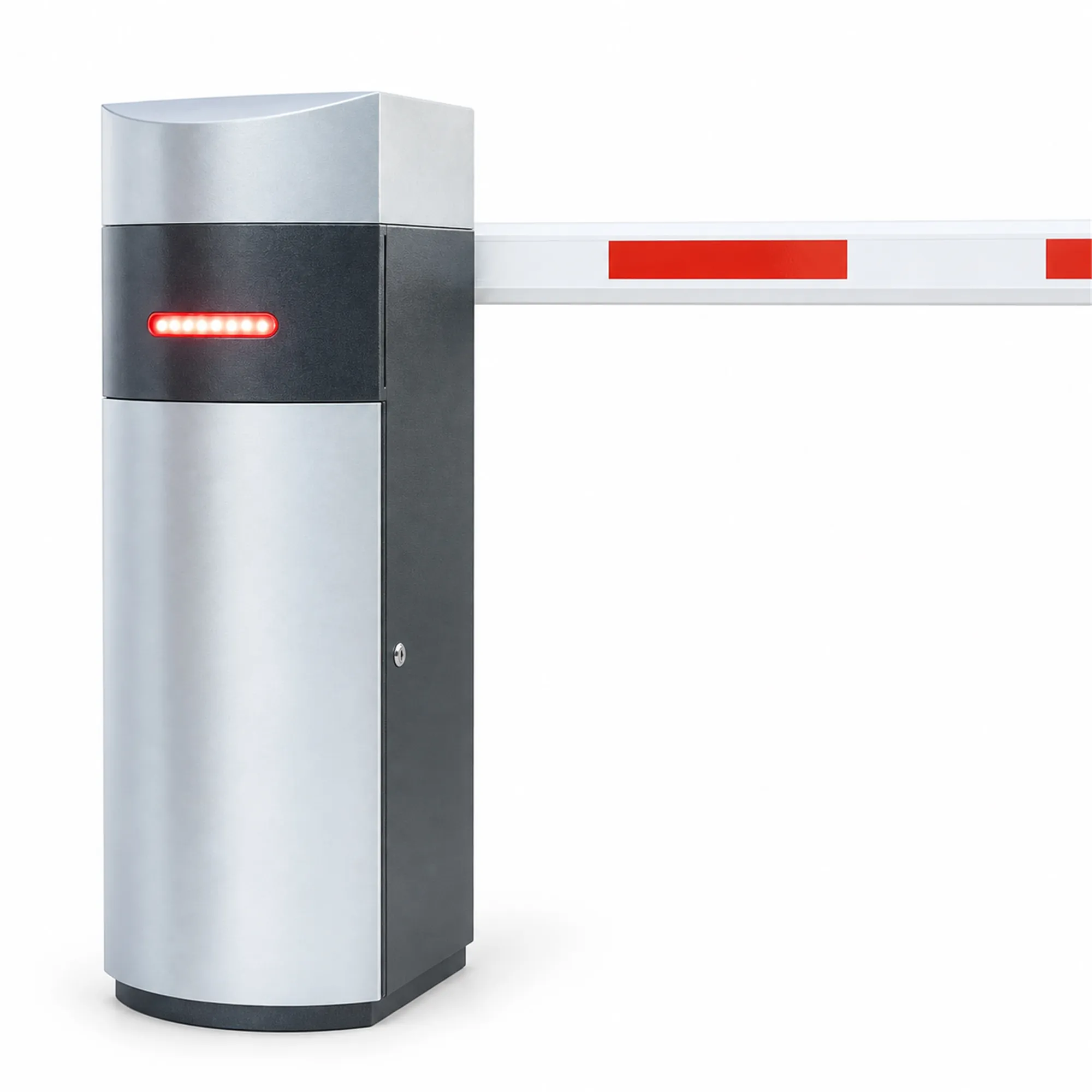
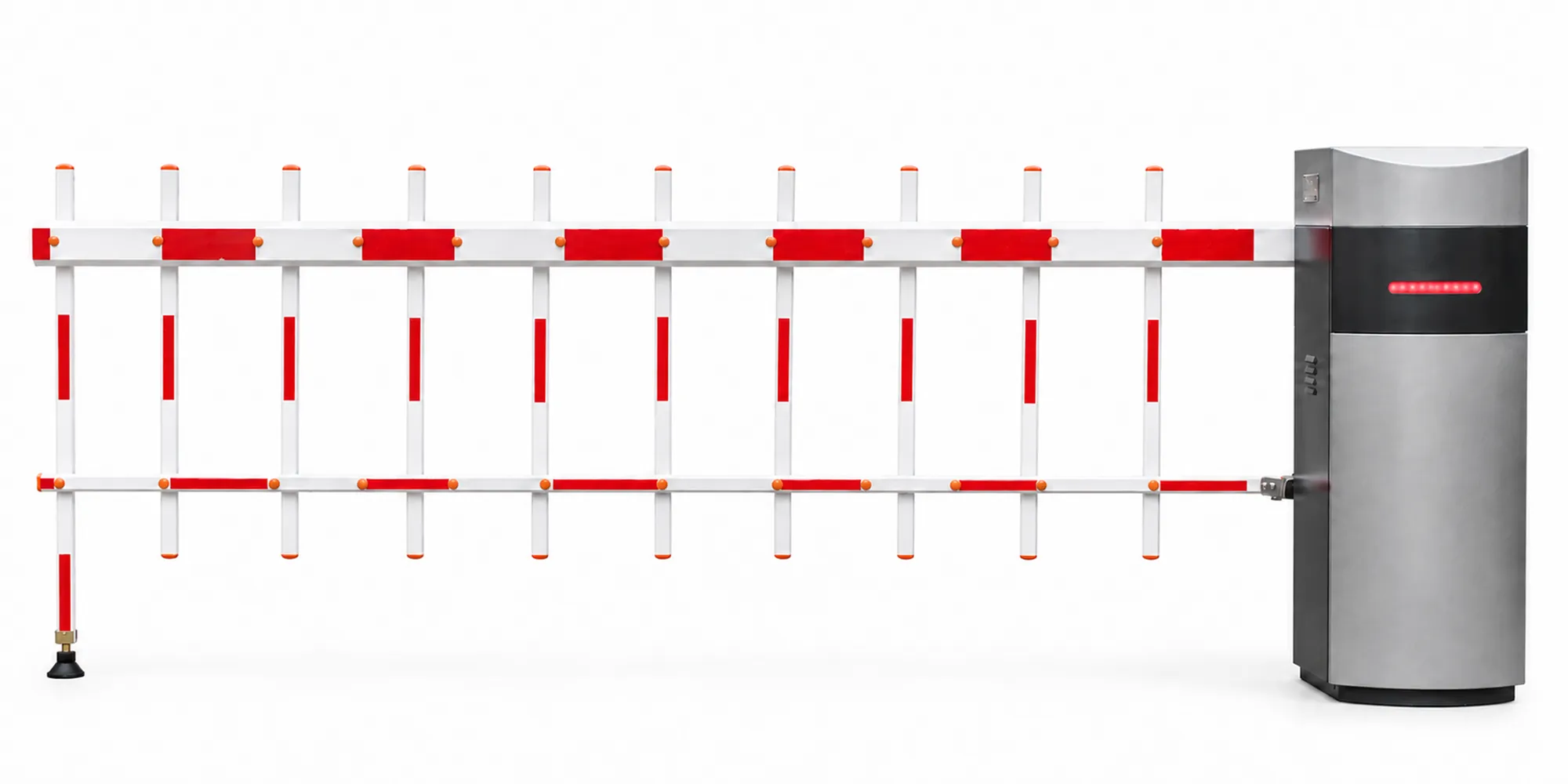
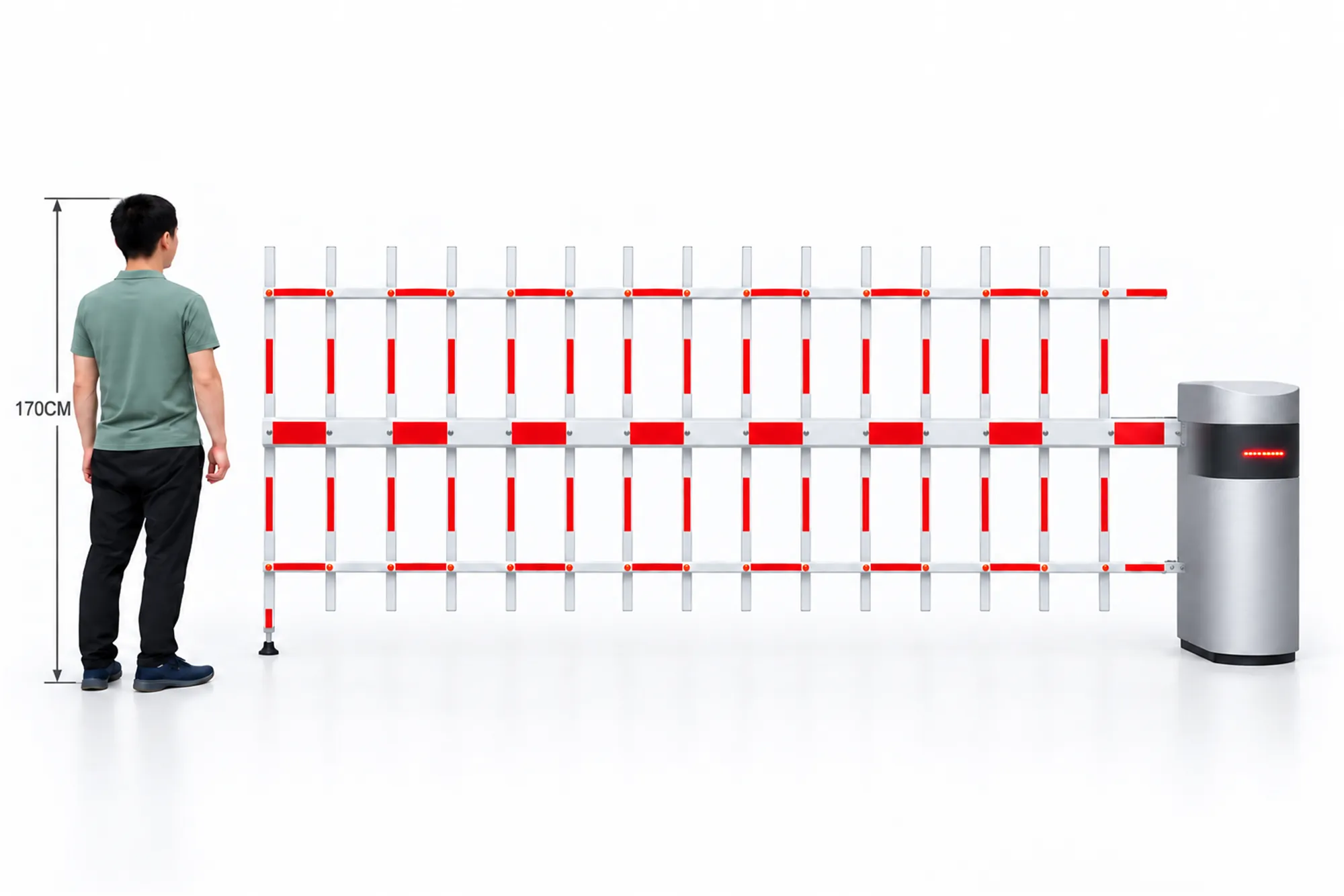
Articulated arm for low ceilings
This SXK-D01FD uses a 90-degree folding arm for entrances with restricted headroom. The linkage lets the inner section rise while the outer section stays approximately horizontal.
Folding Arm Barrier
This SXK-D01FD uses a 90-degree folding arm for entrances with restricted headroom. The linkage lets the inner section rise while the outer section stays approximately horizontal.
Installation contractors and distributors specifying a complete vehicle access lane.
This SXK-D01FD uses a 90-degree folding arm for entrances with restricted headroom. The linkage lets the inner section rise while the outer section stays approximately horizontal.
Send the lane width, lowest overhead obstruction and proposed cabinet position. The drawing needs to show the sweep of both arm sections for your layout.
The illustration shows the arm moving under an overhead structure. Use the dimensions of both arm sections to check the installation against your actual ceiling height.
Opening and closing settings must suit the complete arm, holder and spring balance. Recheck the settings after changing the arm or adding accessories.
The controller accepts compatible open, close and stop commands, plus the specified detection inputs. Loop, radar and photocell equipment must be selected and tested for the actual lane.
The two configurable relays share the selected output mode. Confirm the required status feedback, traffic indication and external control before wiring the lane.
Published drive figures apply to the specified assembly. Set movement for the actual arm, balance and connected detection equipment.
Functional sequence for configuration planning. Use the approved project drawing for physical wiring and installation.
Send these details with your enquiry so we can review the equipment and configuration.
Details for equipment review and installation planning.
Technical reference: datasheet p. 4.
Review the dimensions and installation clearances. Select a drawing to enlarge it.
Review the supplied connection drawings. Select a drawing to enlarge the labels and terminals.
Match the equipment to the site, the users and the access workflow.
Select the arm for the clear opening and available headroom. Coordinate the resident or staff access system with vehicle detection.
Application illustrationConfirm the parking terminal, detector and driver indications together. Review the vehicle stopping point and arm sweep.
Project planning exampleIdentify the installed controller and available supply. Check arm mass, holder, balance and control signals before replacement.
Project planning exampleProduct documents for your technical review.
Product functions, specifications and configuration scope.
Check the device connections against the selected controller.
Questions about selection, integration and installation.
This SXK-D01FD uses a 90-degree folding arm for entrances with restricted headroom. The linkage lets the inner section rise while the outer section stays approximately horizontal.
No. Cabinet setback, holder engagement and tip clearance affect the usable opening. Send the lane drawing before selecting the finished arm length.
Confirm each device in the ordered supply scope. The detector selection and commissioning must suit the actual lane and controller.
An arm change affects mass, balance and movement settings. Review the holder, spring and operator limits before fitting another configuration.
Send the lane width, lowest overhead obstruction and proposed cabinet position. The drawing needs to show the sweep of both arm sections for your layout.
We provide remote video technical guidance, installation videos, wiring diagrams and installation instructions. For large projects, an engineer can provide on-site technical guidance.
Send the model, quantity and installation requirements. Include your layout or controller details where relevant.
Replies within 2 hours during Beijing business hours.